
Scooter Safety for Kids: A Parent’s Guide to First Rides
A new scooter, a big smile and a child who can’t wait to get outside. If that sounds familiar, you’re probably thinking about how to help them get started safely without taking away any of the excitement.
At Zinc, we want the fun to continue well beyond the moment your child opens their scooter. These scooter safety tips for kids are here to help you prepare for their first ride, practise together and build habits you can carry into every outing.
Whether your child is learning to scoot for the first time or getting used to a new model, take it one step at a time. There’s no rush to turn those first pushes into a big adventure.
Before their first ride: get to know the new scooter
Before your child hops on, read the instructions for their specific scooter. Even if they’ve ridden before, a new model may steer, fold or brake differently.
Follow the assembly instructions carefully and check the recommended age and maximum rider weight. As a general guide, the handlebars should sit between your child’s waist and belly button when they’re standing on the scooter’s deck. If the handlebars are adjustable, follow the manufacturer’s guidance when setting the height and secure the adjustment mechanism. Your child should be able to hold the grips comfortably, stand securely on the deck and use the controls as intended.
Show them how the brake works before they start moving. If anything about assembly or operation is unclear, pause and get help rather than guessing.
Make a properly fitted helmet part of every ride
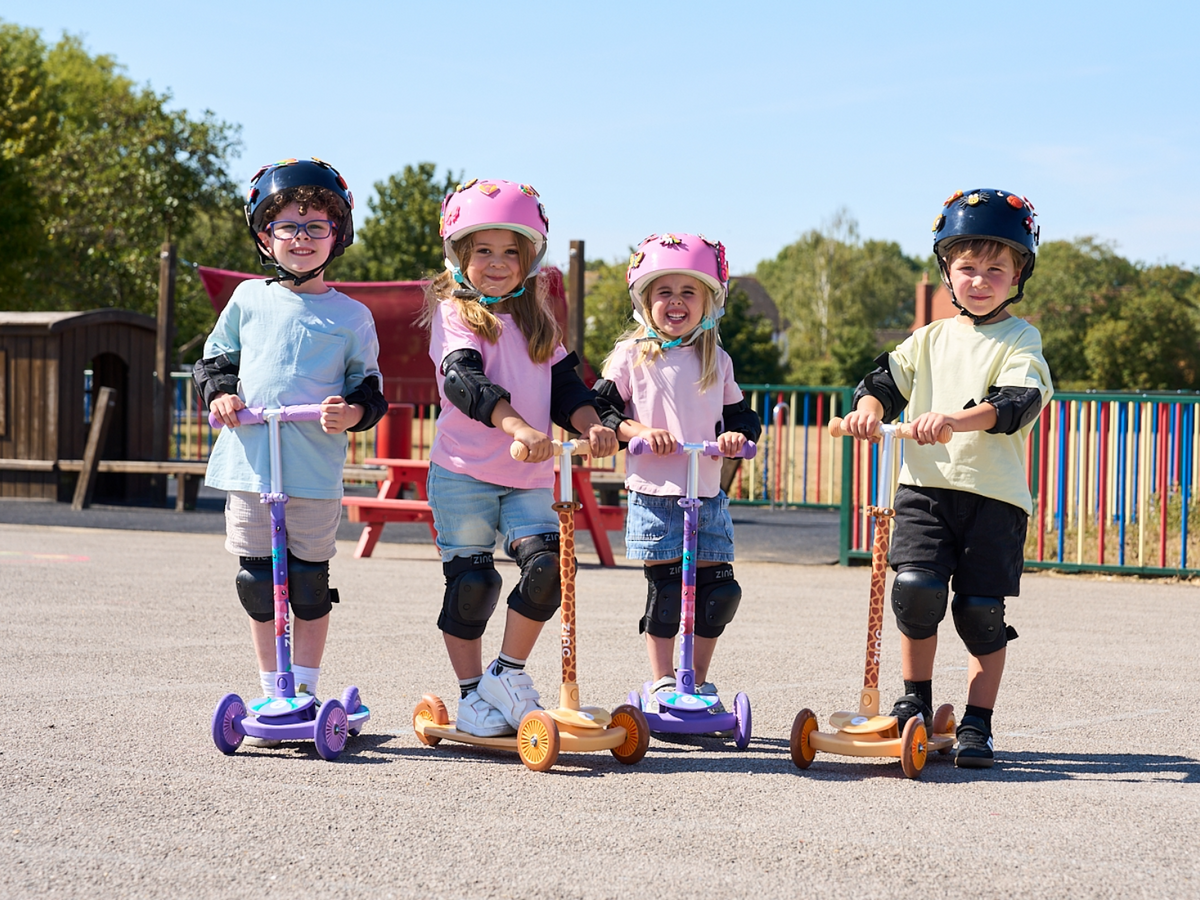
Build the routine from the start: helmet on before scooter time. Choose a helmet intended for scooting or cycling that meets the relevant safety standard, and follow its fitting instructions.
Check that it sits level, covers your child’s forehead and fits snugly without shifting around. Fasten the straps securely and check the fit each time, especially as your child grows. Follow the manufacturer’s advice on replacing a helmet after an impact or if it is damaged.
Knee and elbow pads can provide extra protection while your child is learning. Make sure any protective equipment is suitable for the activity and fits correctly.
For clothing, keep things comfortable and practical. Choose secure shoes with good grip, tuck away loose laces and avoid trailing scarves or other items that could catch in moving parts.
Do a quick scooter safety check before heading out
A short check before each ride helps you spot a problem before your child sets off. Follow the checks in your scooter’s manual, including:
- Wheels: check for loose parts, cracks or excessive wear, and make sure the wheels move as intended.
- Brake: check that it works correctly.
- Handlebars: make sure the grips, handlebars and any adjustment fittings are secure.
- Folding mechanism: if the scooter folds, make sure it is fully locked in the riding position.
- Deck and frame: look for damage, loose components or anything obstructing moving parts.
If anything looks damaged or isn’t working properly, leave the scooter aside until it has been checked and repaired appropriately.
Choose a quiet place for your child’s first scooter ride
Start in a flat, open area where scooting is permitted, away from traffic, steep slopes and busy pedestrian spaces. Check for uneven ground, loose gravel and other obstacles before you begin.
Stay close and give your child a small, manageable space to practise. A familiar spot and a short session can feel less overwhelming than a long outing with lots going on around them.
If they already know how to scoot, still give them time to get used to their new scooter before attempting a longer route.
Help your child practise pushing, steering and stopping
Keep the first session simple. You don’t need to cover everything at once, and stopping deserves just as much attention as setting off.
- Getting on and off: help your child become comfortable standing on the deck and stepping off while the scooter is stationary.
- Small pushes: for a non-electric scooter, start with gentle pushes and short distances rather than aiming for speed.
- Gentle steering: practise wide, controlled turns using the steering method described in the scooter’s instructions.
- Slowing down and stopping: practise using the brake as intended at a low speed in the clear practice area.
Only move on when your child can manage each step comfortably. If they’re learning on an electric model, follow its specific operating instructions rather than treating it like a push scooter.
Teach a few simple habits for safer scooting
Children have plenty to think about when learning something new. Keep your reminders short: look ahead, leave space and slow down near people.
Help your child notice obstacles, corners and narrow paths. Agree where they should stop and wait for you, and practise stopping together before approaching busier spaces.
Keep phones and other distractions out of riding time. Avoid headphones that prevent your child from hearing their surroundings, and keep to one rider.
Common questions about children’s scooter safety
What should I check before my child uses a new scooter?
Read the model’s instructions, complete assembly carefully, check its age and rider weight guidance, and make sure all fittings are secure. Check the helmet fit and explain how to steer and stop before the first ride.
How do I teach my child to stop on a scooter?
Start by showing them the braking method in their scooter’s instructions. Practise at a low speed in a flat, clear area, with close supervision, until they can slow down and stop under control.
What if my child is nervous about riding?
Begin with the scooter stationary and let them get comfortable holding the grips and stepping on and off. Move to short, gentle practice when they’re ready, and finish on a positive note rather than pushing through frustration.
Does this advice apply to electric scooters?
The reminders about protective gear, checks and supervision are useful, but electric scooters have their own operating instructions and rules about where they can be used. Check your model’s guidance and the current GOV.UK electric scooter guidance before planning a ride.
Here’s to plenty of happy scooter adventures
Those first rides are about more than getting moving. They’re a chance to spend time together, celebrate new skills and help your child feel comfortable with their scooter.
We hope your child enjoys every little milestone with their new Zinc scooter. Keep the instructions handy, make your checks part of the routine and let the adventures grow at their pace.
These are general safety tips, not a substitute for the instructions supplied with your scooter and protective equipment. Always follow the guidance for your specific model, provide appropriate supervision and check the rules for your intended riding location.